Does Gut Health Affect Mood? What Fibre Diversity Actually Predicts
Gut-brain axis marketing outran the microbiome research years ago. Here's what a 10,000-person citizen-science study actually found about plant diversity.

Not medical advice — general information based on published research.Full disclaimer →
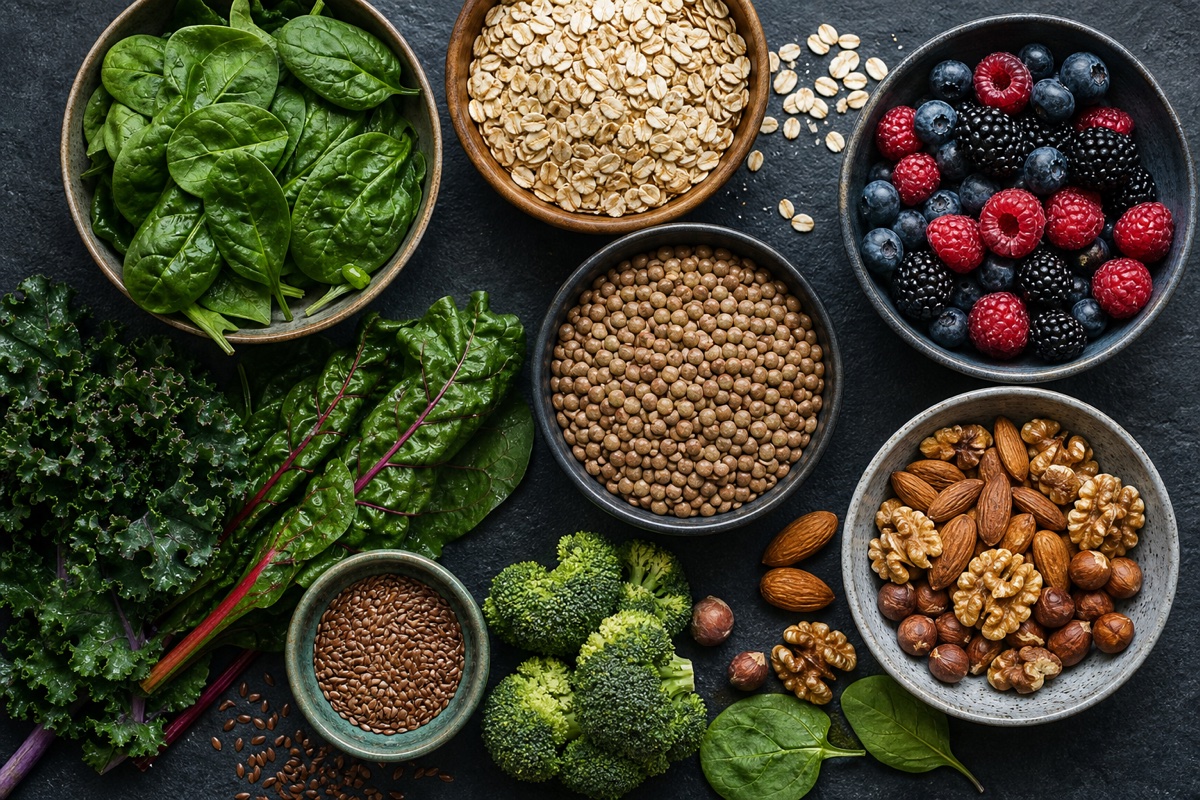
Short answer
The strongest finding in gut microbiome research is that eating a wide variety of plant foods, not a high volume of one fibre source, predicts greater microbial diversity. The gut-mood link is mechanistically real but far less settled in humans than 'heal your gut, heal your mood' content implies.
On this page
“Gut health” has become one of the most marketed, least precisely defined phrases in wellness content. Underneath the marketing, there is real, if still developing, science — and the strongest finding isn’t about a superfood, it’s about variety.
The “40 plants” study
The most-cited large-scale evidence here comes from the American Gut Project, published in mSystems in 2018 [1] — a citizen-science effort that collected gut microbiome samples and dietary data from over 10,000 participants. The headline finding: people who reported eating more than 30 different plant species per week had significantly more diverse gut microbiomes than people eating 10 or fewer, regardless of whether they identified as vegan, vegetarian, or omnivore.
This is worth being precise about: it’s an observational, cross-sectional study, not a randomized trial. It shows a strong association between plant variety and microbial diversity, not a proven causal chain running all the way to mood. It’s also where the popular “30 plants a week” target comes from — a reasonable, evidence-informed goal, but not a precise threshold with a specific mechanistic cutoff at exactly 30.
Why variety specifically, and not just “more fibre”
A 2016 review in Trends in Endocrinology & Metabolism [2] covers the mechanistic side: different plant fibres feed different bacterial species, because different microbes are specialised to ferment different fibre structures. A diet heavy in one fibre source (oats every day, say) feeds a narrower set of species well; a varied diet feeds a broader one. This is the actual reason “diversity of intake” outperforms “quantity of one fibre type” as the more useful target.
The advice isn’t “eat more fibre.” It’s “eat more different fibres.”
Where the gut-mood claim gets ahead of the evidence
The gut-brain axis is a real area of active research — the vagus nerve, microbial metabolites, and immune signalling do provide plausible mechanisms connecting gut microbial activity to mood and cognition. But “heal your gut, heal your mood” content routinely overstates how settled this is in humans. Most of the strongest gut-brain findings are from animal models (germ-free mice recolonised with human microbiota, for instance); human trials of specific “psychobiotic” probiotic strains for mood exist, but are small, strain-specific, and not yet at a stage where a blanket recommendation makes sense for a healthy population.
What actually holds up
- Eat a wide variety of plant foods across a week — the “different fibres feed different microbes” mechanism is genuinely well-supported.
- Treat “30 plants a week” as a useful target, not a magic number with a specific citation behind the exact figure.
- Be skeptical of specific probiotic-for-mood claims until they cite a human trial of that specific strain, not a general “probiotics support gut-brain health” statement.
The habit tracker’s “5+ plant varieties today” habit is a smaller daily version of exactly this target.
Common questions
How many different plants do you actually need to eat?
The widely cited '30 plants a week' figure comes from an observational citizen-science study, not a randomized trial — it's a reasonable target, not a precise threshold with a known mechanism for why 30 specifically.
Do probiotics improve mood?
Some small trials of specific probiotic strains ('psychobiotics') show modest mood effects in specific populations, but the field is early, strain-specific, and not yet at the point of a general recommendation for a healthy population.
Sources cited
- [1]McDonald D, Hyde E, Debelius JW, et al. (2018). American Gut: an Open Platform for Citizen Science Microbiome Research . mSystems.Observational
- [2]Deehan EC, Walter J (2016). The Fiber Gap and the Disappearing Gut Microbiome: Implications for Human Nutrition . Trends in Endocrinology & Metabolism.Guideline
Related on thesmartplate.org
"Carbs are bad for you"
Depends on quality and quantity: refined carbs in excess track with worse outcomes in cohort studies, fibre-rich carbs track with better ones — 'carbs' isn't one category.
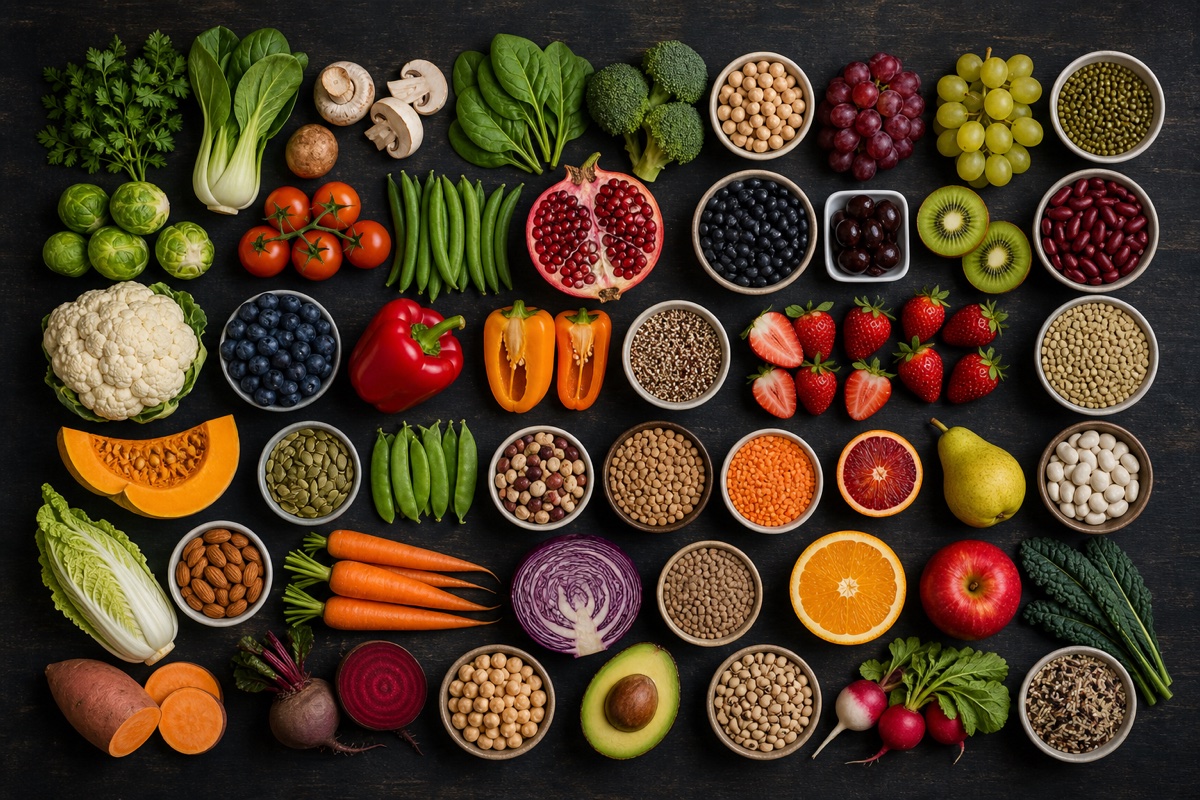
What the American Gut Project Actually Found About Plant Diversity
People who reported eating more than 30 different plant species per week had significantly more diverse gut microbiomes than people eating 10 or fewer — regardless of whether they identified as vegan, vegetarian, or omnivore.