The claim
“Eating fat makes you fat”
Metabolic-ward trials find low-fat and low-carb diets produce similar fat loss at matched calories — fat isn't uniquely fattening compared to other calories.

Not medical advice — general information based on published research.Full disclaimer →
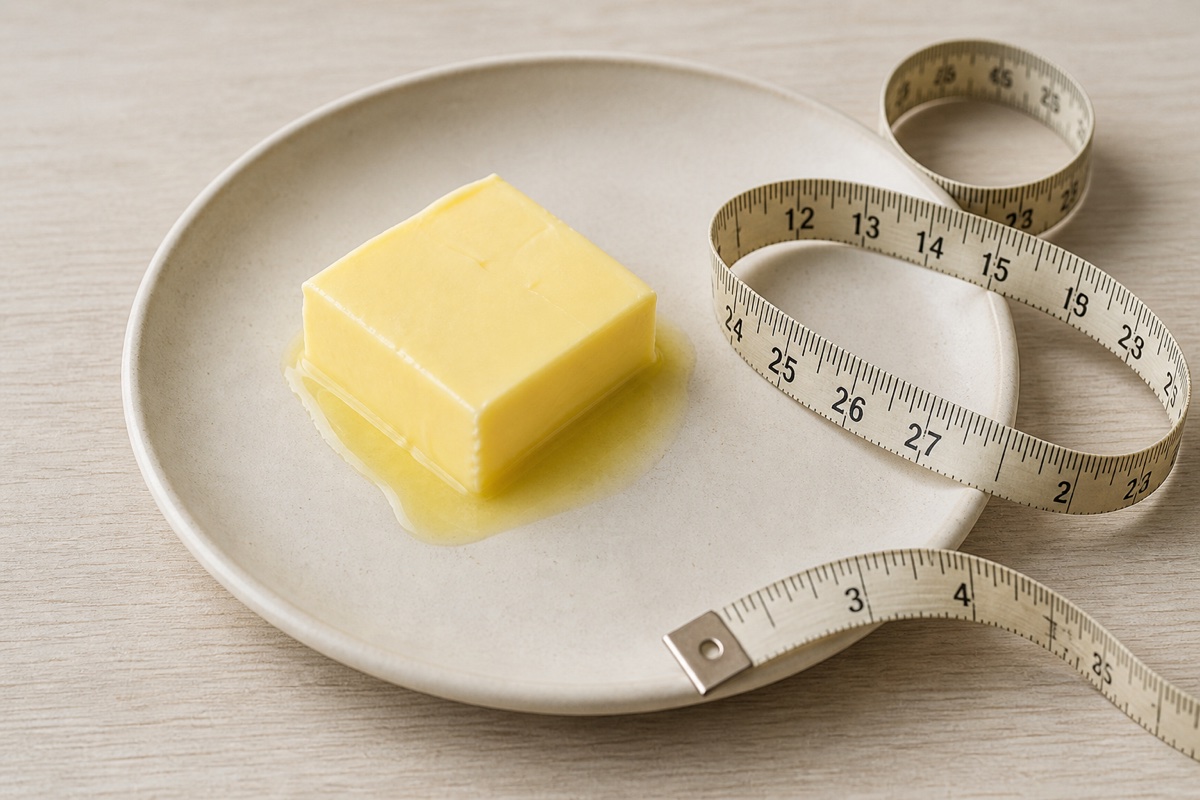
This one has a strange history: dietary guidelines spent decades pushing low-fat eating partly on the logic that dietary fat, being calorie-dense, must be uniquely responsible for body fat. The controlled trials that actually tested this directly don’t support it.
A 2015 metabolic-ward study in Cell Metabolism [1] — the kind of tightly controlled trial where researchers can verify exactly what participants ate, not just what they self-reported — compared a calorie-matched low-fat diet against a calorie-matched low-carbohydrate diet in adults with obesity. Both diets produced fat loss; the low-carb diet actually produced slightly more short-term fat loss in this specific trial, the opposite of what “fat makes you fat” would predict.
A larger, longer 2009 trial in the New England Journal of Medicine [2], comparing four diets with different fat, protein, and carbohydrate ratios over two years, found essentially equivalent weight loss across all four macronutrient compositions, as long as calorie targets were similar. The consistent theme across both trials: total calorie balance predicts weight change far better than which macronutrient you’re restricting.
The macronutrient a diet restricts turns out to matter much less than whether you can actually stick to it.
None of this means dietary fat quality is irrelevant — the type of fat (see our seed-oil deep-dive) has its own separate evidence base around cardiovascular health, distinct from body-fat-gain specifically. But the specific claim “eating fat makes you fat,” treated as a calorie-for-calorie mechanism, doesn’t survive the controlled trial data.
Common questions
Does it matter whether you cut fat or carbs to lose weight?
For total weight and fat loss at matched calorie deficits, controlled trials find the macronutrient split matters much less than the total calorie deficit and how well a person can sustain the diet long-term.
Sources cited
- [1]Hall KD, Bemis T, Brychta R, et al. (2015). Calorie for Calorie, Dietary Fat Restriction Results in More Body Fat Loss than Carbohydrate Restriction in People with Obesity . Cell Metabolism.Single RCT
- [2]Sacks FM, Bray GA, Carey VJ, et al. (2009). Comparison of Weight-Loss Diets with Different Compositions of Fat, Protein, and Carbohydrates . The New England Journal of Medicine.Single RCT
Related on thesmartplate.org
Is Seed Oil Actually Bad for You?
The 'seed oils are toxic' claim leans hard on a mechanism. The large cohort studies that actually measured outcomes tell a different story.
Does Meal Timing Matter for Weight Loss?
Time-restricted eating has a genuine mechanistic story behind it. The best controlled trial on it found something more modest than the marketing.